Showing posts with label FRS FreeState. Show all posts

Thursday, October 2, 2014

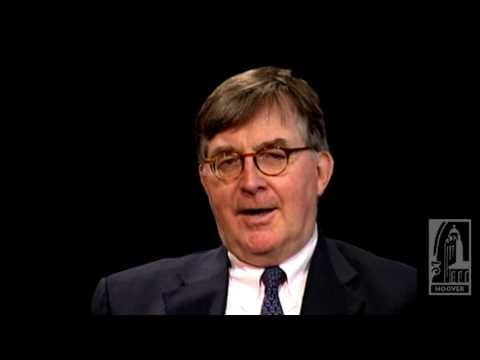
Hoover Institution: Uncommon Knowledge: Peter Robinson Interviews Charles Kesler: The Grand Liberal Project

Source:FRS FreeState

What conservative historian Charles Kesler is talking about is American Progressivism. A political philosophy that’s government centric. And in the United States Federal Government centric, but there Are Progressive governors and other Progressives in state government that believe in a certain level of federalism. But the idea of American progressivism is a very collectivist political philosophy that’s about using government to make society better. 

That we need these government policies and government programs to make people’s lives better for them. Even if we need high taxes to finance all of these programs. "That if government has a lot of the people’s resources, then that money will be spent better. And those decisions will be made better if big government is doing these things better for us, than people spending their own money on their behalf and making their own decisions".
But the philosophy that I just described is not Liberalism. And is America’s version of Democratic Socialism. Where you mix in capitalism and the private sector with a large welfare state. To assure that resources are spread out equally that’s common in Europe. And in Europe this philosophy would actually be described as socialism. But in America with socialist and socialism having such negative stereotypes and so forth attached to them, Socialists in America tend to be called Progressives. 
But this is not liberalism because liberalism is about the individual. And progressive in the sense that government has a role to see that as many people as possible have the opportunity to live in freedom. But it’s not the job of government to take care of people. And it’s not the job of government to give us our freedom. But to see that the opportunities are there for people to get their freedom for themselves like through education and job training. A safety net for people who are out of work that empowers them to work their way back to being able to take care of themselves and so-forth.
When right-wing historians like Charles Kesler and others examine and write about liberalism or progressivism or socialism or communism, they tend to put all these philosophies into one pot. As if they are all the same thing and depending on how partisan or ignorant they are about liberalism and tend to look at liberalism as America’s version of communism or Islamism. That Liberals want to outlaw all individual freedom basically and make everyone dependent on the state and so-forth.
Liberalism is not about the state, but about the individual. That Liberals believe in individual freedom. But both economic and personal freedom, not like some right-wingers today when they are talking about individual freedom, they are mainly talking about economic freedom and religious freedom for Christians. But that "personal freedom is dangerous because it empowers people to make bad decisions that are bad for society as a whole who has to pay for them".
Another thing about Liberalism and Liberals is that Liberals not only believe in individual freedom again both personal and economic freedom, but that individual freedom should be for everyone regardless of race, ethnicity, gender, religion or sexuality. Or even income level, that all Americans should have the opportunity to live in individual freedom in America. 

And that government has a role to see that these opportunities are there for everyone, but what people do with these opportunities is up to us. And not having a welfare state there to take care of everyone. And have everyone dependent on the state for our economic well-being. Liberals truly believe in individual freedom, but again for everyone, whereas today's so-called Progressives believe in the welfare state. To be there to take care of everyone mixed in with private-enterprise. 

Wednesday, October 1, 2014

History Comes to Life: Wendell Willkie

Source:FRS FreeState 

When you hear the term classical liberal, it’s generally used to talk about Libertarians today. Even though Libertarians are right-wing, center-right depending on what type of Libertarian they are. And Liberals are left-wing, the center-left on the American political spectrum. And then there are people who are called modern liberals and these people are supposed to be the Liberals of today. Even though in Canada or Europe they would be described as Social Democrats or Democratic Socialists or Progressives. 
Because that's  what so-called Modern Liberals are. It’s Social Democrats who have built their philosophy around the state. And what the state can do for the people and tend to be skeptical about what the people can do for themselves. And want a big state to be there to take care of everyone so no one get’s left behind. But these people in America tend to be called Modern Liberals, or even Liberals when they actually have more of a socialist mindset than a liberal mindset. Liberalism or classical liberalism is not about the state and is not against the state. 
Liberalism is in favor of the individual and empowering people to be able to do everything that they can for themselves and is against big government. Big government being government that tries to do too much for the individual. Or trying to run their life and even protecting people from themselves. Which is why Liberals tend to be against prohibition whether it comes from the Right or Left. Prohibition is a statist idea, a progressive idea that "the people aren’t smart enough to make some decisions for themselves and we need government to do that for them even if that means locking people up". 
Even criminally punishing people when they make unhealthy decisions with their own lives. Liberals and I’m one of them believe that the individual should be able to live their own life as they see fit. As long as they aren’t hurting innocent people with what they are doing. Because we know ourselves and our own lives better than government. And have to do deal with the consequences of our own decisions. Liberals believe in both economic and personal freedom that one is not worth much without the other. 
Today we now have Progressives who are paternalists who not only believe in the welfare state, but prohibition as well. As we see with these bans on soft drinks to use as examples. To go along with tobacco and other products. These people aren’t Liberals even in a modern sense and perhaps not even Progressives. But paternalists who believe they know better how individuals should live their own lives and they have a right to believe that, but they aren’t Liberals. 
Wendell Willkie was a true Liberal Democrat before the New Deal and left to become a Republican. Because he believed that President Roosevelt was moving the Democratic Party and the country in a more socialist direction. But Willkie wasn’t against government, but believed that government should be there to serve us not run our lives. Do for us what we can’t do for ourselves, that government get’s it’s power from us, not that it decides what we can do with our own lives.
When I think of Liberals, I think of Wendell Willkie, John Kennedy and today people like John Kerry, Bill Clinton and Dick Durbin. People who believe in both economic and personal freedom and that these things should be for everyone. That we are all entitled to have a shot at living a successful life and living in freedom. And that’s where government comes in, but not creating a government to take care of everyone and show us how to live. Which is what separates liberalism from today's progressivism and libertarianism. One philosophy being all about government and the other philosophy being almost completely against government.

Tuesday, September 30, 2014

Heritage Foundation: Evan Sayet: 'How Modern Liberals Think'


Source:FRS FreeState 

As an actual Liberal myself and not someone who just calls myself a Liberal, but someone who actually understands liberalism and not someone whose called a Liberal by people who couldn’t tell the difference between liberalism and communism, which a lot of partisan right-wingers aren’t able to do today, as if they couldn’t tell the difference a whale and an ant, I go out of my when I can to explain the differences between liberalism classical or modern and socialism or Anarchism.  
Because todays so-called ‘Modern-Liberals’ which is a term that I do not like. Its is mixed in socialism as it relates to the economy, with anarchism as it relates to law enforcement, national security crime and punishment, terrorism etc. And paternalism when it comes to personal choice issues. Like how we can communicate with each other, political correctness, what we can eat and so forth. But only tend to be actually Liberals when it comes to civil liberties, but that "government has a protective role, prohibition even". And they’ve added tobacco, junk food, soft drinks to their list of things that they would like to be outlawed, or seriously regulated and taxed in the United States.
The people who I described as ‘Modern-Liberals’, are not actually Liberals. But perhaps European Social Democrats would probably the be most correct way to describe them. Even though they tend to like to be called Progressives. But they are way to the Left of Teddy Roosevelt, Franklin Roosevelt. Harry Truman, perhaps even Henry Wallace and certainly Lyndon Johnson. All of these men all had a healthy skepticism about the role of government in our lives and understood the limits of what government could do for us.  
Today’s Progressives (I call them that for now until I find a better term) do not seem to have a healthy skepticism about what government can do for people. Except as it relates to civil liberties and perhaps the War on Drugs. And the men I described believe in the role of authority, not to run our lives, but to protect us from people who would do us harm. Criminals, foreign invaders, terrorists to use as examples. This seems to be the only area that todays Progressives seem to be skeptical about governmental power in our lives and that it should be limited.
The easiest way to probably label me politically would probably be to call me a Classical-Liberal. But unless that means you are talking about someone like a Wendell Willkie who was a Liberal Democrat up until the New Deal came around in the 1930s and then saw the Democratic Party moving in more of a socialist direction and then left the Democratic Party to run for President as a Republican in 1940. Or Jack Kennedy, I do not like the term Classical Liberal to describe my politics. Because the term classical-Liberal tends to be used to describe Libertarians. 
And I’m not a Libertarian, I’m not anti-government, just anti-big government both as it relates to economic policy, but also personal issues. And I do not want government trying to run our lives for us. So I just prefer the term Liberal or Liberal Democrat even, which I Certainly am to describe my politics. Not in the classical or modern sense, but in the real sense. As someone who believes in Liberal-Democracy, individual freedom both economic and personal. To go with individual responsibility.

The basic difference between Liberals and todays Progressives has to do with the role of government . Todays Progressives simply want a lot more of it especially at the Federal level and want less personal choice. Because they tend to see it as dangerous and that "people with a lot of freedom will make more mistakes". Where Liberals again believe in individual freedom both economic and personal to go with a quality education and opportunity for all. To be successful in life and then be held personally responsible for what we do with our own live

Sunday, September 28, 2014

The History TV: Thomas Jefferson American Republic


Source:FRS FreeState 

There is a debate in the United States about what is America according to our own Constitution. Are we a republic or a democracy, the fact is we are both, but then why are we both and how are we both. A republic is not necessarily democratic or authoritarian, but it is a republican form of government, small r. Where the people are governed by civilians for the most part, not by the military or a monarchy or religious leaders. But you can have democratic republics and you can have authoritarian republics. 

America is a democratic republic, China is a communist republic to use as examples. A lot of times when people tend to think of democracy, they automatically think of voting the right to vote and majority rule. But the fact is that is only one aspect of democracy. Democracy even depending on what type of democracy, what you are talking about is about freedom and people having freedom over their daily lives and not being harassed by government because they are seen as enemies of the state like in Syria, Egypt or Iran.
America is a federal republic which means we have a federal government as well as state and local governments. Rather than one big government that essentially runs the entire country which is common in authoritarian states. But even at least to a certain extents in big government social democracies. Where a lot of power is centralized with the national government. America is a federal republic in the form of a liberal democracy where not everything is done by majority rule. Elections for the most part yes, but where we are governed by a large extent by a Constitution with three branches in the Federal Government. 
As well as our state and local governments that have responsibility for seeing that our Constitution is equally enforced. Where we all have constitutional rights that are supposed to be equally enforced. So we can’t lose our constitutional rights just because they may seem unpopular or get in the way with whatever the current party in power has planned for the country. 
That is what Thomas Jefferson and the other Liberal Democrats who are our founding fathers created more than two-hundred and thirty years ago. A federal republic in the form of a liberal democracy that comes with a lot of individual freedom. Set responsibilities and authorities for government, but where their number one responsibility is to protect our freedom and constitutional rights equally under law.

Thursday, September 25, 2014

Unity and Diversity: The European Federation: An Introduction to the Nation States

Source:FRS FreeState

A European superstate going forward makes very good sense for Europe for several reasons. Economically at least for the next ten years or so, would have the largest or second largest economy in the world. Either Europe or America until China passes them, as well as being a developed country of around 400M people or so. Depending on how they drew the map of their United Federation, that would replace the European Union. 

The EU is essentially the United Nations of Europe, but a lot more competent and relevant. It would also makes sense for Europe in foreign policy as well as national security and in the War on Terror. Because they would have a large enough military and law enforcement to defend the country that would replace NATO. And a unified foreign policy so their message would be clear. They already have an executive which is what they call a Commission. Their version of an Administration, which is what America, Mexico , Russia and several other Federal Republics have. 

Basically an executive branch with a President and Ministers and they already have a legislative branch a Parliament, as well as judicial branch. Europe has already been down the road of becoming a superstate for about sixty years now. But haven't gone completely forward with it. Most of Europe at least West of Russia and the other Slavic republics, speak English at least as a second language. And the Euro States could still operate in their native languages, but the Federal Government would operate in English so the whole country could communicate with each other. But of course a European Superstate would be a major challenge with all of the national and ethnic pride in Europe. Which is probably the main reason why this has never happened before. 

There a lot of questions that would have to be solved before a European State could ever happen. How would the map be drawn, the United Kingdom would never want to be part of this. Scandinavia is basically a country of its own with a lot of land, almost the size of mainland Europe West of the Slavic states. Thats very wealthy and energy independent that could defend themselves. The Slavic states aren't ready politically or economically and all have questionable human rights records. 

And I doubt Europe would want the Slavic states and of course the Russian Federation would never be part of Europe. They are an economic and military superpower waiting to happen on their own and can get their on their own within 10-20 years they will be a major rival to not only Europe but the United States as well. The Balkans and Turkey, similar issues as the Slavic republics. And Turkey is more part of the Middle East anyway than Europe and the Caucus states, again similar issues as the Slavic states. But a Western European Union as one Federal Union, would be the next superpower in the world. 

So a European map to me would look like as far West as Portugal and going as far East as Italy in the South. And then as far West as Belgium in the North, big state to Germany or maybe Poland in the North. Making Europe a very large country physically about the size of Mexico but with about 400M people huge population. The other questions have to get to national and ethnic pride, the role of the Federal Government and what would it do. Which is why I believe they would have to have a federal system. And not a big centralize central government. 

Giving the State Governments a lot of authority in how to run their States, on most Economic and Social Issues. But where each State would have to comply with the Federal Constitution. Similar to America and where Brussels the capital of Europe would be responsible for managing the currency, foreign trade, immigration policy, energy policy, foreign Policy, national security and interstate law enforcement. And perhaps setting national standards in the other areas, but not running them. So each state would know they would still have plenty of authority to run their state. But where they would be economically, and physically secure with the Federal Government. 

A United Federation of Europe as a Federal Republic makes a lot of sense in several areas. Especially with the emergence of China, India, Russia, Brazil and even Mexico. This would make it much easier for Europe to take care of themselves in several areas. But national and ethnic pride is what's holding this union from happening. 

Tuesday, September 23, 2014

EuroNews: Jose Manuel Barroso Calls For a Federation of States

Source:FRS FreeState

Before I layout what a Federal Union of Europe which I’m guessing this new European superstate would like and what they would need to do, first I’ll tell you what I believe the borders of the country would look like. It wouldn’t be the entire European/Eurasian continent. Going from lets say Belgium all the way over to the Caucus States and Turkey and Middle East. 

Because the United Kingdom would probably never want to be part of this because of its history and the fact they are a monarchy and do very well as a power by themselves. You would probably be talking about a country going from Belgium in the Northwest with Brussels being the capital of this new Federalist Republic and I say Federalist for a reason which I’ll get into later. 
It would range from Belgium in the Northwest to Poland in the Northeast. To Portugal in the Southwest to Italy in the Southeast with the former Soviet Union Slavic states in Eurasia out of this new country, as well as the former Yugoslavia. As well as Scandinavia which physically is about the size of continental Western Europe anyway. Out of this Federalist Republic as well.
So we would be talking about a huge new country physically about half the size of the continental United States. But somewhere in the neighborhood of 30-50 million more people who would be either the new largest economy in the world or right there with the United States. That would also be military and diplomatic, as well as political power because this new country would replace NATO with a President and executive branch now controlling this military. 
This new Europe could compete with anyone in the world economically and everything else that would be a leader in some of these areas as well. That would also be a democracy again if this was done right and set up successfully which is just as important as the idea of a Federalist Republic of Europe getting it right. Similar to how the United States of America was set up in the late 1700s.
So how would a Federalist Union of Europe look like, somewhere between 27-30 states. Federal capital in Brussels and probably similar to the United States that it would have checks and balances, separation of branches simply because of the fact that each state in the union use to be an independent country so they would want their own autonomy over their domestic affairs, but also so the big states in the union like Germany, France and Italy to use as examples do not control most of the political power in Brussels. 
So you would have an executive branch like the commission which is called administration in America. With a President at the head with several different cabinet level ministries. But with a legislative branch that would probably be Bicameral Assembly or Congress, or Parliament so the smaller states as well as the people are are well represented as well. You would have some type of Federal assembly. With a lower House and an upper house called the Senate or council. The lower House would represent Federal House districts and the Senate would represent the states.
This new assembly similar to how Congress works in America would be able to write and pass their own legislation. In other words write laws with the President getting veto and signing power over them. And the assembly would have to pass the same laws before it would go to the president. The House and Senate would have to conference and pass the same law before it is sent to the President. The President as head of the commission would get to send legislation to the assembly as well as veto or sign assembly legislation.

You would then need a Federal judicial branch that would judge the constitutionality of laws that are passed at all levels. As well as handle civil disputes including a high court. As well as criminal cases that the commission prosecutes which again is similar to how America and a lot of other Western democracies function. The difference being the Europe would be more Federalist with more power going to the states over their own affairs. So Europe probably wouldn’t be a social democracy with so much power centralized with the central government. Because states rights because of the fact these states use to be countries would be highly respected.
Because of all the cultural, ethnic, and national tensions like with creating a national language, Europe would have to be Federalist with the states having autonomy over their domestic affairs. With a lot of power going to the governors and state legislatures. So these states feel well represented in Europe and feel that this new powerful country is home for them and being able to live in their native state and speak their native language. But having a Federal language which would probably be English so the Federal Government could do its business, but also so Europeans of different ethnic backgrounds could communicate with each other.

Monday, September 22, 2014

STV News: Scotland Tonight- Dona Dougall Interviewing Laurie Clark & Peter Hughes: How Would Independence Affect the Prospects of Business


Source: STV News-
Source:FRS FreeState

Perhaps the future of the United Kingdom should be a federalist one where the states or republics in Britain. England, Scotland, Wales and North Ireland would be able to handle their own domestic affairs. Have their own state or provincial governments and handle their own education, law enforcement, regulatory system, social welfare systems. The things that the states in America do or provinces in other developed democracies do. 

But where the national government in London handles the things that only national governments should be doing. Like the currency, foreign affairs, national security etc. Where the English, Scotts, Welch and Irish feel closer to the U.K. and feel British because they have a large say in what happens in their daily lives in the places that they live. With a federalist system it wouldn't be top down with big government thinking it knows best for everyone. 
Instead the states and localities would be able to handle the issues that they see and are on top of live with everyday. With the national government handling the things that countries need to have done at the national level. Like interstate commerce, interstate crime, foreign policy, the national economy, taxation, but where the states and localities could have their own tax revenue to pay for the operations of their own governments.
STV News: Scotland Tonight- How Independence Would Affect Scottish Business?

Sunday, September 21, 2014

Clinton Foundation: Governor Bill Clinton's 1992 Democratic Nomination Speech


Source:FRS FreeState

In 1992 when the Democratic Party nominated Bill Clinton for President, the Democratic Party completed the transition it started in the mid 1980s after losing the 1984 presidential election in another landslide similar to 1984 and the third landslide loss they had at the presidential level since 1972 and after the 1984 landslide loss. A coalition of Democrats who by the time Bill Clinton wins the Democratic nomination for President in 1992 were called New Democrats who aren’t Moderate Democrats, but Liberal Democrats, but not in the stereotypical ways that Liberals tend to get stereotyped as today.  
But Liberal Democrats who weren’t pro-government, but not anti-government either, but Democrats who wanted to use government to empower people to be able to take care of themselves. Not use government to try to managed Americans lives, but empower people so they can do that for themselves. Which is very different from the way the Democratic Party was prior to 1985 and how they were seen.
I believe the biggest legacy that Bill Clinton had as President of the United States and his political career in general was how he changed the Democratic Party and moved the Democratic Party. Changing it from a party that was at least as seen and in some cases with the Far-Left in the Democratic Party. As a anti-business, anti-wealth, anti-success, anti-military, ant-religious, anti-American even party. To a party that became in favor of all of those things, but wanted them to be used in a responsible way. 
Didn’t want people to be able to force their values on the rest of the country that didn’t agree with them especially through law. Wanted all Americans to have a good opportunity to be successful in America instead of a select few being able to control most of the wealth in America. Who weren’t anti-military and didn’t believe America should or could police the world, but protect America. That was pro-law-enforcement but also respected civil liberties and personal freedom as well.
The New Democratic wave in the Democratic Party really started in 1976 with the Democratic Party nominating Jimmy Carter for President. And how President Carter moved the country as President on economic and foreign policy. By taking the position that the country didn’t have unlimited resources and couldn’t do everything for everybody. That there was a limit to what government could do for the people who people themselves needed more power and freedom to be able to take care of themselves and that America also needed to be strong at home as well as abroad. 
One problem with Jimmy Carter is that he didn’t get reelected and as a result the Democratic Party in the early 1980s went back to the Social Democratic Party that was at least seen as against those things I’ve already mentioned. And seem to have a new tax increase or government program for all of the country's problems. And what Bill Clinton did in 1992 was move the party back to what Jimmy Carter started in 1976 and was able to move the party forward because he got reelected in 1996.
I give Bill Clinton a lot of credit as it relates to the Democratic Party especially because he essentially saved the Democratic Party and kept it as a national party that remained competitive at the presidential level. And thanks to George W. Bush and Barack Obama the Democratic Party wins back Congress in 2006 and have retained control of the Senate since 2007 even though they lost the House in 2010 and the Democratic Party has been able to do these things because they are no longer seen as a Far-left Social Democratic Party. 

But instead a Liberal Democratic Party that in a lot of these areas are now beating the Republican Party. And all of this started with Jimmy Carter in 1976 and went full circle with Bill Clinton in the 1990s. And that trend has continued ever since with McGovernites the Social Democrats in the Democratic Party now finally fighting back to try to take back the power they had in the Democratic Party in the late 1960s and 70

C-SPAN: President Bill Clinton's 1993 Inaugural Address

Source:FRS FreeState

Before Bill Clinton became President of the United States, Liberal Democrats were seen as tax and spenders, soft on Crime, soft on defense, soft on welfare, anti-private enterprise, anti-success, anti-wealth, pro-centralize power, "that the Federal Government had all the answers to America’s problems". We were seen as anti-American, Unpatriotic anti-religious and fiscally irresponsible, deficits don’t matter. 
How times changed in just eight years because by 2000 Democrats and a lot of that credit should go to President Clinton, were ahead of Republicans on a lot of these issues. We were seen as the party of fiscal responsibility, we were now leading Republicans on tax cuts and foreign policy, crime and many other issues. President Clinton brought a real liberal agenda to the United States. Not the liberal agenda which is how liberalism has been stereotyped in America.  
But a liberal agenda that was based on what liberalism is actually about. Different from progressivism or democratic socialism and its very hard to tell the difference. Between Progressivism and Democratic Socialism today, at least how they are both practiced. But President Clinton’s liberal agenda was based on yes individual liberty. He didn’t want to empower the Federal Government to take that away from Americans, but he also wanted to empower people who didn’t have the freedom to live their own lives and be self-sufficient, because they lacked the skills to do so.  
President Clinton liberal agenda was based on, individual liberty and responsibility. That if you work hard and play by the rules and are productive, you should be rewarded for that and not have government on your back. This is what liberalism its different from progressivism that is more government oriented. Or democratic socialism that is almost completely government oriented. Its about empowerment, individual Liberty and responsibility. That free adults should have the liberty to live their own lives. But then have to deal with the consequences of their decisions. Good and bad and its also about equality of opportunity. 
Not equality of result, that for people who don’t have the skills to be successful and self- sufficient in life, that they are empowered to do so. Which makes society as a whole better off to have more well-trained workers, with the ability to take care of themselves. And more well-trained workers in the workforce, having good jobs and being productive. Paying their fair share of taxes, but not paying taxes that are so high, that it discourages people from being productive.
Bill Clinton put liberalism back on the map in the United States as a positive force for change and made it a mainstream political philosophy, because he was able to put aside the false negative stereotypes that had been suffocating liberalism the previous twenty-five years. And was able to show Americans, that it wasn’t about government doing everything or nothing. But that government should be limited to what it does well and what’s Constitutional. 

Saturday, September 20, 2014

Hoover Institution: Peter Robinson- Interviewing James Pierson: 'The Rise and Fall of Liberalism'

Source:Hoover Institution-  Author James Pierson, on Uncommon Knowledge with Peter Robinson, talking about his book: The Rise and Fall of Liberalism.
Source:FRS FreeState

"In Camelot and the Cultural Revolution, James Piereson asserts that, as the 1960s began, liberalism was  the single most creative and vital force in American politics and that the Kennedy assassination caused a split within this movement between its more traditional supporters and cultural activists that still exists today. Peter Robinson explores with Piereson how and why this happened -- how a confident, practical, forward-looking philosophy with a heritage of accomplishment was thus turned into a doctrine of pessimism and self-blame, with a decidedly dark view of American society."

From Hoover Institution

Again I separate socialism from liberalism. And the progressivism From Teddy Roosevelt in the early twentieth century all the way up through the 1950s up until John F. Kennedy, is progressivism in its best form and classical form and I would argue in its only form.

And the so-called Progressives of today that are part of the New-Left that emerged in the 1960s and 1970s as a response in favor of the civil rights movement and the Great Society and of course against the Vietnam War, is a much different and more leftist movement.

The Socialist New-Left: People who tend to be against authority all together as it relates to law enforcement and national security and this movement got behind George McGovern for President in 1972 and Senator McGovern ran with them and lost in a landslide as a result.

So these are people who are called Progressives today or "Modern-Liberals", (a term I hate) but they aren’t either and I tend to call them Social Democrats or McGovern Democrats, McGovernites, Socialists, Communists in some cases, but they aren’t liberal in the Jack Kennedy sense or any sense at least from my perspective. Because they are not liberal, (to put it plainly) and tend to be illiberal. Because they tend to be against free speech and even property rights. They're so far to the left on economic policy and so anti-authority and rule of law when it comes to law enforcement and national security.

One of the reasons why the death of President Kennedy was so tragic was for both political and ideological reasons (from a Liberal’s perspective) because the 1960s was the decade that brought so much economic as well as personal freedom to so many new Americans. With the tax cuts of the early 1960s and the civil-rights laws of the mid and late 1960s, American women entering the workplace. And had Jack Kennedy survived and then been reelected in 1964 which of course we’ll never know, we probably are not involved in Vietnam the way we were. At least not invading the country.

And President Kennedy probably moves much more cautiously in Vietnam and we probably would’ve played a more of a supportive role there and not invading North Vietnam. And trying to wipeout the Communists on our own. So the Democratic South could govern the country. But of course we’ll never know this.

The 1960s was a great time for real Liberals not the New-Left because of the Cultural Revolution that brought so much freedom to new Americans as well as the economic freedom that came in that decade. But by the late 1960s because of Vietnam and the New-Left, it was a bad time for the Democratic Party.

Both sides of the American political spectrum have their centers and their cores. And the fringes that sort of give the Left and Right bad names and make them look bad as if the entire Left and Right is like that. And that’s what we saw in the Left in America in the 1960s and 70s. Where the Left in America was no longer made up of Liberals and Progressives. But the New-Left emerged of people who I would call Socialists. Some cases even Communists. Or Occupy Wall Street people of today.

The New-Left are people who do not see America as a great country, but a force for bad in the World. And want to try to make the country like Europe even though Franklin Roosevelt and Lyndon Johnson never wanted to go that far. And some people who call themselves FDR Democrats today do not even understand Franklin and just look up to him because of the New Deal. And see him as their vision for creating some type of European welfare state and finishing the job of the New Deal and Great Society.

But in the 1990s America liberalism made a comeback with Bill Clinton. And the McGovern wing of the Democratic Party was no longer in charge. And Clinton New Democrats were and the Democratic Party once again became about opportunity and freedom for all both economic and personal. Rather than being about the welfare state and government dependence.

As well as a country that could not only defend itself, but would do what it took to defend itself without trying to govern the world. Bill Clinton brought American liberalism back to life and made it a governing philosophy again and perhaps saved the Democratic Party as well.

American Rhetoric: President William Jefferson Clinton's Farewell Address


Source:FRS FreeState

Before Bill Clinton became President of the United States, Liberal Democrats in America were seen as something we are not. We had all sorts of negative stereotypes about us, not all of them unfair. Because there are Democrats back then and today who meet these stereotypes, but they just aren’t Liberal Democrats. And there’s a different and accurate term that defines their politics. But they just aren’t liberal, even though they have some liberal views on social issues. 
Pre-President Clinton, Liberal Democrats were seen as tax and spend, big government supporters, Socialists. Who are soft on crime, soft on defense, soft on welfare. That we just wanted to soak the rich in taxes to take care of the poor. And soak the middle class in taxes to take care of them as well. That we wouldn’t do what was necessary to protect the country. And that we see the US Constitution a document to use for advice. But that it wasn’t enforceable.
By the time President Clinton left office in 2001, Democrats were more trusted on law enforcement, national security, foreign policy, the economy, fiscal responsibility than Republicans who use to own these issues. And this didn’t happen by accident. Just within the first two years of the Clinton Presidency, President Clinton got a deficit reduction package through Congress. That had deep budget cuts and a tax hike in the wealthy. 
President Clinton got two trade agreements through Congress as well. NAFA and GAT and got the 1994 Crime bill through Congress as well. That had the Brady bill on Handguns, meaning to buy a new handgun, you had to pass a background check. And new tough sentences on violent offenders. Including a Three Strikes Law, 25-Life for criminals convicted of violent felonies. 
Presidents are judged by what shape the country was in when they took over. And what shape the country was in when they left office. President George H.W. Bush by a lot of measures was a successful President. Especially on Foreign Policy, but the country was just coming out of recession. With high unemployment, low economic growth, high interest rates and Inflation and a large Federal debt and deficit. 
President Clinton also inherited a high crime rate when he took over in 1993 and all of those problems were either gone by 2001, or those problems were under control when he left office in 2001. And it didn’t happen by accident, because of the policies that the President got through Congress from 1993-95. But with also Welfare to Work in 1996, working with a Republican Congress.
President Clinton showed Americans that liberalism is not about being soft and irresponsible and that taxpayers will always cover the mistakes of others. That it was about individual liberty, the US Constitution and limited government. But that people also had to be held accountable for their decisions. And that America had to do what it takes within the US Constitution to defend itself. And that government can help people who are down get on their feet and become self-sufficient. This is why President Clinton was such a successful President, the best President we’ve had since Harry Truman. 

Friday, September 19, 2014

The New Republic: William J. Dobson: A Victory For Democratic Foreign Policy


I had just turned five years old and was in kindergarten when President Jimmy Carter left the White House in January in 1981. After losing reelection in a landslide to Ronald Reagan in November 1980. I remember President Carter being President for like a year or so and at least hearing about the 1980 presidential election when they were happening. Jimmy Carter I believe in a lot of ways is an very impressive and intelligent man.  

And I believe the best Ex-President America has ever had, especially with what the Carter Center has done around the World on human rights. His intelligence and morality even came through while he was President with what he tried to do and was successful to a certain extent on energy policy and even foreign policy. While attempting to get America off of foreign oil and with his success’s with the Panama Canal Treaty, recognizing the People's Republic of China and the Egyptian-Israeli Peace Treaty.   

But in some ways he was also a weak leader and I don’t say that with a smile on my face. Like a lot of brilliant people, President Carter had and probably still does a great ability to analyze issues and the problems. But what he lacked was the ability to come up with answers to deal with the issues he and his Administration and the country faced. The economy and the Iranian Hostage Crisis being perfect examples of this. 

When I look at President Obama’s presidency, I see similar characteristics to President Carter. Not be able a lot of times to make decisions quickly, even if the right answer seems obvious. Like Libya for example, or being able to take tough stands on issues. Because I believe he’s more interested in not offending people and thats what happens a lot of times when you make tough decisions. Even if its the right thing to do and thats why they are called tough decisions. 
There’s rarely full agreement to do anything in America a country of 310M people. A lot of times there’s not even a consensus, so if Leaders want to get things done and make the right decisions. They have to risk offending people, including special interest groups that generally support you. Th reason why Barack Obama is not a 2nd Jimmy Carter, because even though it takes him a while a lot of times to get to the right decision. He eventually gets there.

Health care reform, Wall Street reform, the Bush tax cuts, the budget agreement and Libya are good examples of this. This past weekend when the President and his National Security Council were in the process of taking out Osama Bin Laden, the President displayed a new ability, the ability to make the right decision and to do it quickly. His NSC gave him the opportunity to take out the most important global serial murderer. And President Obama pulled the trigger and took him out and it made me proud that he’s my President and to be an American.

Thursday, September 18, 2014

James Miller Center: President Lyndon Johnson: Remarks on Decision to Not Seek Reelection in 1968

Source:FRS FreeState 

When President Lyndon Johnson decided not to run for reelection in March of 1968, the United States was very divided, but they were united around the fact that they didn’t like Lyndon Johnson as their President. His approval rating was somewhere in the 30s and America was a very divided country. Between the establishment and I guess Culture Revolutionaries that were tired of being told how to live and be and what it was like to be an American. And wanted to live their own lives the way they wanted to. Whether the conservative establishment was happy with their choices or not.   

And of course we were divided as a country over Vietnam, the civil right movement, crime was high, riots everywhere, the Federal Government getting much bigger with the Great Society. And America was looking for a change and had President Johnson ran for reelection, he would’ve definitely had a primary challenger. Senator Gene McCarthy had already announced he was running for President. And Senator Bobby Kennedy was considering running for President. Both Democrats and LBJ might of won the Democratic Nomination. 
But there’s no guarantee of that and even if that did happen he would’ve ended up leading a divided Democratic Party, which is what Vice President Hubert Humphrey ended up doing. Going up against a united Republican Party around Richard Nixon. Starving for a big win and a path back to power after being out of the White House and being the minority in Congress for the last eight years.

With Vietnam, high crime and the riots, LBJ lost the ability to lead a country that was divided. And looking for someone else to be their President and he made the right decision both politically. But for the country as well and gave Americans an opportunity to look for someone else to be their President. And take the country in a different direction, which is exactly what they got in Dick Nixon.

Tuesday, September 16, 2014

Cannabis News:Vincent J. Lavery: No One Has Ever Died From Smoking Marijuana


Source:FRS FreeState 

The idea that we lock people away in prison for several years for smoking, growing or selling pot, when we have overcrowded prisons with two-million people locked up in prison and many of these offenders being non-violent, when we don’t lock up people for drinking, possessing or selling alcohol or smoking tobacco, which are just as dangerous drugs if not more so, but for some reason aren’t considered narcotics, is more dangerous than illegal narcotics itself. 

Alcohol and tobacco are both very addicting and can cause of serious diseases, including addiction. But also heart disease, liver disease, lung cancer, diabetes and others. Plus the problems alcohol and tobacco bring to the society. With our economy with people being less productive because they are sick from drinking too much. Or have clothes that smell like nicotine. 

And so many other issues facing this country, with multiple economic problems, seems very ironic to me, it tells me the reason for marijuana prohibition is about politics and ideology rather than policy. That politicians can’t come out on favor of marijuana legalization because they are worried about looking “soft on crime”. And if we legalize marijuana, "that could lead to other drugs". Really? see that actually that happens with alcohol and tobacco. Again both legal.

If we legalized with regulation and taxation of marijuana and treat it like alcohol, what happens, less people going to jail and prison who didn’t hurt anyone. Which saves us a lot of jail and prison space. Money that could be spent on other priorities. We now spend more on our corrections system than our education system. More tax revenue would be collected because of the sales tax on marijuana. More well-paid jobs would be created, producing, growing and selling marijuana.

With these workers paying taxes off of their income. Instead of making all of their money on the black market not paying taxes, unlike people working in the alcohol and tobacco industry’s. We would save money on law enforcement because instead of going after people for marijuana activities, they could spend their time and resources on actually going after dangerous criminals. Who are actual threats to society.
I’m not arguing that we legalize marijuana today and let the chips fall where they may. What I’m saying is that we treat like alcohol. And give the marijuana industry no special advantage over the alcohol or tobacco industry. 21 or over to smoke, sell or produce marijuana. Licensed to sell or produce marijuana. No driving or flying or operating any vehicle under the influence of marijuana etc.

A significant tax on marijuana, because we are not talking about spring water here. Marijuana does have negative side-affects. This would be a much better approach than prohibition. Just look at alcohol prohibition of the 1920s and 30s, that didn’t work either. Because if people want to do something bad enough, they’ll find a way to do it and the hell with the consequences. If you're a true believer in limited government and a true disbeliever in big government, then your for legalization with regulation and taxation of marijuana. Because support letting people live their own lives, as long as they are not hurting anyone else with their freedom protect everyone's freedom.

The New Republic: Jamie Holmes: The Causes of Poverty in America: Why Some Americans Can't Escape Poverty


If you look at why some people do very well in America, professionally, economically and most other things and why some people do well in these areas and why some people do OK, get by, but with not a lot of financial security and why some people are barely surviving and why some people can’t get by and fight and struggle for their survival everyday and need a lot of public assistance just to struggle to get by, it is about education. 


It gets to education, because the better you're educated and the more skills that you have to offer in the workplace and in other areas, the better you're chance of doing well in life. Its also about personal choices that people make. Do they finish school or drop out especially in high school. Which is generally a free ticket to poverty. Do they have kids when they are financially and emotionally ready to raise kids or not. Or do they have kids before they are ready to raise them well.  
And before they have the skills that they need to make a good living in life. And do their kids have two parents that are both in their lives and raising them. Or do they have one parent without the skills and tools to raise them well in life. And do their kids finish school and get themselves the skills that they need to get a good job or not. Your level of education and the personal choices that people make in life, is the best indicator of how well they’ll do in life. 
Whether people are self-sufficient or do they need public assistance to survive. Because they don’t have the skills that they need to get a good job and be self-sufficient. Wealthy, upper middle class, middle class people do well in life because they are well-educated. And have the skills that they need to get a good job. People in poverty in a lot of cases don’t have these skills and in most cases have to go back to school. 
Because they didn’t finish school, to get the skills that they need to get a good job. And become self-sufficient, which is why education is so important especially public education in America. And why people need to be able and go to good schools so they can get the skills that they need to be successful in life. Going forward the way to finally win the War on Poverty in America. 
A war that was declared back in 1965, instead of just talking about it, will be about education, empowering people in poverty to go back to school or go to school and get the skills that they need. To move themselves out of poverty and will be about reforming our public schools. So we are producing enough workers in America, so people don’t have to live in poverty as adults in the first place. Thats how we finally win this war.

Sunday, September 14, 2014

C-SPAN: Senator John F. Kennedy Speech to the Houston Ministries


Source:FRS FreeState 

Sen. John F. Kennedy was an Irish Catholic Northeastern Liberal Democrat. Running for President in 1960 and then being nominated by the Democratic Party as their presidential nominee, in a country that was overwhelmingly Protestant. That was fairly ignorant when it came to Catholicism and didn’t trust Catholics. And had a lot of miss givings about Catholicism and were worried that a Catholic President would try to establish some type of Catholic theocracy, that would govern the United States. 

So because of the ignorance about Catholicism in America, Senator Kennedy had to answer some questions and lay out his beliefs when it came to Church and State how his religion affects his life in 1960. I wrote a blog about this a few weeks ago on FRS FreeState on Blogger , after former Sen. Rick Santorum now a Republican presidential candidate, commented on Senator Kennedy’s speech about Church and State. 

Where Senator Santorum said that the JFK Speech made him want to “throw up”. And said that Freedom of Religion and Separation of Church and State is exactly that, that we as Americans have the Freedom of Choice in whether to practice religion or not. But that we are a  constitutional republic in the form of a liberal democracy. And we are govern by a Constitution, I believe the greatest Constitution in the World. As far as the amount of individual liberty it guarantees and protects. That we are not a theocracy and government can’t get involved in religion. Other than to protect it.

If its a Theocracy you want to live in, based on your own religious beliefs and be governed by that, rather than a constitutional republic, then I suggest you consider moving to the Islamic Republic of Iran. or the Islamic Kingdom of Saudi Arabia. Because to be able to live in a country like that in the United States, would take a Constitutional Amendment in this country. Because we are a constitutional republic in the form of a liberal democracy. Not a theocracy, with Separation of Church and State. 

Saturday, November 2, 2013

Mometrix Academy: What is Social Liberalism

Source:Mometrix Academy- Socialism liberalism: is not socialism 
Source:FRS FreeState

"Learn more about social liberalism and its roots. Know what social liberals believe and why. Make sure you are prepared for your exam.

Mometrix Academy is the world's most comprehensive test preparation company. This channel will provide you with videos that will help you learn about many different subjects."

Source:Mometrix Academy

In this post, I’m just going to get into what social liberalism is and what it isn’t. What it really is and what it really isn’t and I’m writing this especially this weekend when I hear people who are called ‘college Liberals’ who want to control speech they disagree with on campus. And have it eliminated, or outlawed as if these people are Liberals, or even Social Liberals. Because they want to eliminate speech that may offend people they want to protect. When the fact is for anyone who understands liberalism social, or otherwise knows that one of the key elements of liberalism is free speech and the right to free assembly.

Just look at the First Amendment which is one of the most liberal things ever written. Paraphrase- Congress shall make no law that fringes on free speech in America. So when talking about liberalism social, or otherwise, or studying it, make sure you are actually talking about liberalism and not fascism. Like these politically correct speech codes by the Far-Left in America that want to eliminate speech in America that they find offensive. Because these people aren’t Liberals, but Fascists, or leftist statists. Which is a bit different.

So free speech is a big part of social liberalism, but it is certainly not the only part. And when Americans tend to think of social liberalism, they tend to think of people are pro-choice on abortion and other women’s healthcare issues. And that even the state meaning government in general should have to fund these things for women who can’t afford them in general. As well as being pro-women’s rights in general and pro-gay rights and pro-minority rights. And that none of these groups should be discriminated against at all. When the fact is these things aren’t true. Liberals, are pro-individual rights which is different.

That we are all created equal with certain basic fundamental rights that can’t be taken away from us unless we hurt other people’s freedom. And being pro-individual rights covers everything from abortion to homosexuality. But also things like marijuana. But also gambling and pornography. And again free speech which even covers an individual’s right to quite frankly be an asshole and say and do offensive things. And that everyone is treated equally under law. And are not denied things based on race, ethnicity, gender, religion, nationality or sexuality.

A good way to think of social liberalism, or a Social Liberal is someone whose pro-choice. Literally pro-choice across the board regardless of the issue. As long as people aren’t hurting innocent people with the choices that they are making. That people should have the right to make their own bed in life and make their own way. But then are also responsible for sleeping in their own beds. In other words, individual freedom and responsibility. And not being able to force others to pay for one’s bad choices in life.

As for what the women in this video had to say about social liberalism, who will go nameless simply, because she didn’t give out her name and I don’t personally know her, or know of her. She nailed the definition of liberalism in the broader context. And perfectly laid out how liberalism, or how she called it social liberalism is different from libertarianism, or what is called classical liberalism. Or even democratic socialism, even though she didn’t mention that. That liberalism, is about individual liberty and individual rights. But that those rights are for everybody and that where government in is not to manage our lives for us. But to help people in need be able to get by in the short-term and help them be able to live in freedom as well. And not need to be taken care of.

John F. Kennedy Liberal Democrat

John F. Kennedy Liberal Democrat
Source: U.S. Senator John F. Kennedy in 1960